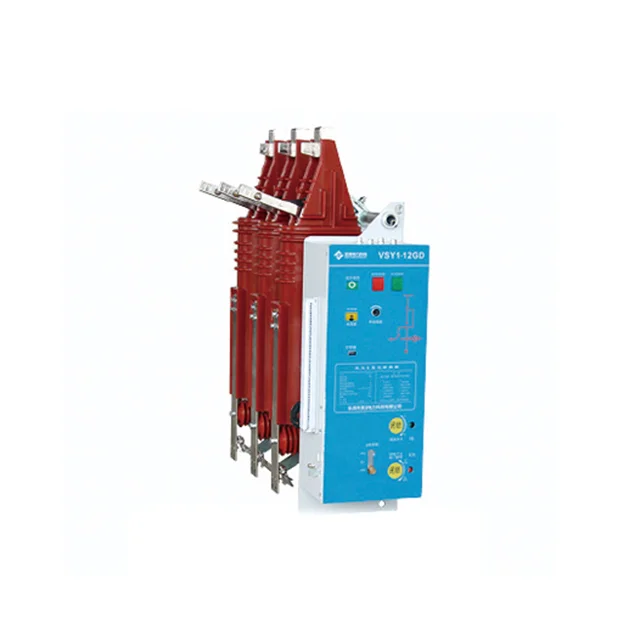
Vacuum Circuit Breakers and Load Break Switches for MV Distribution

Indoor and outdoor vacuum circuit breakers and load break switches for 3.6kV to 40.5kV distribution, including VS1-12, VIG(C)-12GD, FLN36-12 and FKN12A switch-fuse combinations. Units provide transformer and feeder protection with manual or motorised spring operation, and are routine tested for resistance, insulation and mechanical endurance.

Mechanism Adjustment and Routine Testing In-House

We assemble the vacuum interrupter, operating mechanism and secondary wiring as one unit, then set travel, contact pressure and auxiliary contacts on the test bench. Mechanical operation and power frequency tests are recorded for every breaker. You receive the breaker curve, wiring diagram and test report with the unit.

sage certifications

Certified Quality You Can Verify

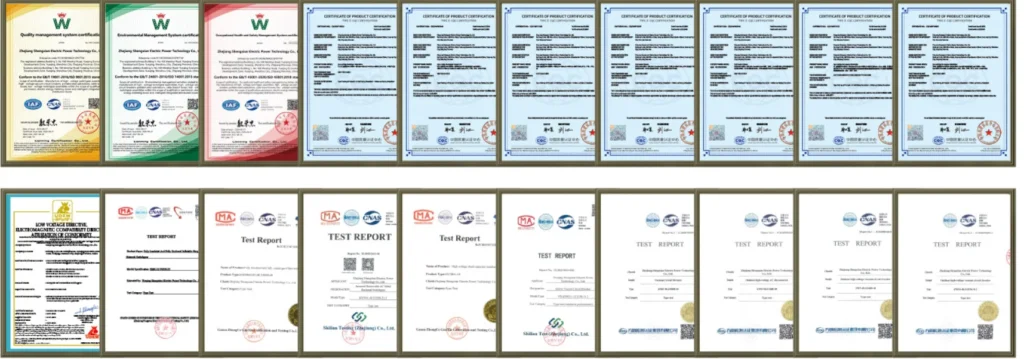
Every product is backed by CQC certification, ISO 9001, ISO 14001 and ISO 45001 management systems, plus type-test and inspection reports. Certificates and routine test records can be supplied with your shipment, and third-party inspection is welcome before delivery. Clear documentation, traceable testing and consistent quality control protect your project from acceptance delays and long-term compliance risk.
Indoor Reliable High-Voltage Vacuum Breaker

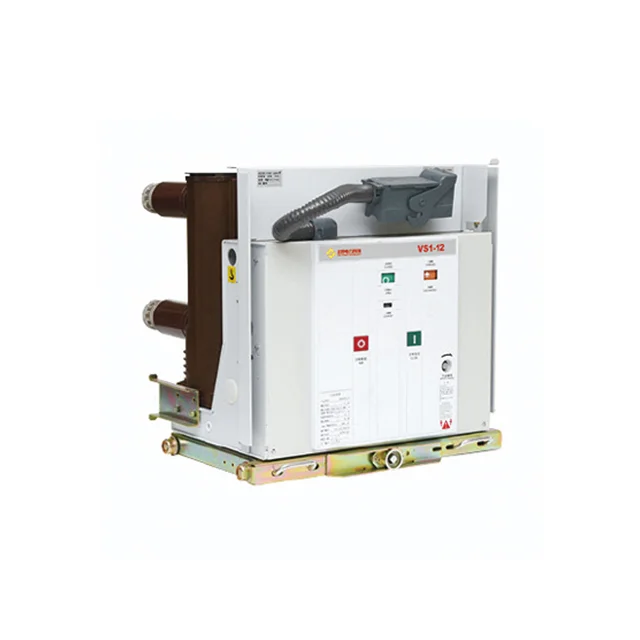
VS1-12 Indoor Vacuum Circuit Breakers

VS1-12 breakers use a vacuum interrupter and a spring mechanism in a compact chassis for 12kV feeder and transformer protection. Fixed and withdrawable versions share the same mechanism, so spares and operating practice stay consistent across the switchgear lineup.
Indoor High-Voltage SF₆ Load Break Switch

FLN36-12 SF6 Load Break Switches

FLN36-12 uses SF6 insulation to switch load current in a sealed, compact body, with an earthing position and a fuse option for transformer protection. It suits ring main units and small substations where a full breaker is not required and a simple, maintenance-free switch is preferred.
Indoor High-Voltage Three-Position Vacuum Circuit Breaker

Three-Position VIG(C)-12GD Mechanisms

The three-position mechanism gives closed, open and earthed positions in one device, with a visible gap and a defined operating sequence. That removes a separate earthing switch and saves panel space in compact switchgear and prefabricated substations, while keeping the interlock logic clear for the operator.

VCB and Load Switch Buying Guide | Ratings, Mechanism and Duty

1. Match the device to the fault level and load

Confirm the system voltage, the rated current and the fault level at the installation point. A vacuum breaker clears fault current, so its interrupting rating must exceed the calculated fault level. A load break switch only breaks load current, so it is chosen for the normal current and used with a fuse where fault protection is needed.

2. Choose a breaker or a load break switch

DeviceBreaks fault currentTypical use
VS1-12 vacuum breakerYes, with relay protectionIncoming, outgoing feeders and transformer protection
VIG(C)-12GD three-positionYes, integrated isolating and earthingCompact switchgear and RMU modules
FLN36-12 SF6 load break switchNo, load current onlyRing and transformer switching with a fuse
FKN12A / FKRN12A switch-fuseThrough the fuseSmall transformers and branch circuits

Use a breaker where adjustable protection and fault clearing are needed. Use a load break switch with a fuse where the transformer is small and a simple, low-cost protection is acceptable.

3. Select fixed or withdrawable mounting

Withdrawable breakers sit on a truck that rolls out for service, which shortens downtime and gives a clear isolating gap. Fixed breakers are bolted in place and suit compact panels, ring main units and cost-sensitive projects. Confirm the panel interface, the truck travel and the test position before ordering a replacement breaker.

4. Specify the operating mechanism and control

Manual spring charging is the baseline. Motorised charging, shunt trip and closing coils, auxiliary contacts and anti-pumping allow remote operation and SCADA control. Confirm the control voltage, the DC supply, the number of auxiliary contacts and whether the mechanism needs a mechanical operations counter.

5. Confirm interlocks and the protection interface

The breaker must interlock with the panel earthing switch, the truck position and the cable compartment door. Confirm the trip circuit, the relay interface, the CT ratios and the test terminals. A breaker that trips correctly on the bench can still fail to protect if the relay wiring or the CT ratio is wrong.

6. RFQ checklist

  1. System voltage, rated current and fault level
  2. Breaker or load break switch, fuse rating if used
  3. Fixed or withdrawable mounting
  4. Manual or motorised mechanism, control voltage
  5. Relay, CT ratio and trip circuit
  6. Interlocks and panel interface
  7. Quantity, destination and delivery date

Send the single-line diagram and the panel interface drawing and the device can be confirmed in one round.
Get a Tailored Quote

Share your drawing, voltage, current and quantity. Our engineers will confirm the configuration and send a clear quotation, usually within 24 hours. OEM customization is welcome.

Product Guides and Industry Insights

Explore practical guides, product comparisons and application notes across our power distribution range. Find clear advice on product selection, installation and maintenance to support your next project.
+86-19518180868 Phone linda@cnsagepower.com E-mail Chat on WhatsApp WhatsApp