Surge Arrester Buying Guide | Voltage, Energy and Installation
1. Match the arrester to the system voltage and earthing
The arrester rated voltage is not the same as the system voltage. It is chosen from the maximum continuous voltage that can appear at the installation point, which depends on the system voltage, the earthing arrangement and the temporary over-voltage after a fault. A solidly earthed 10kV system and an isolated 10kV system need different arrester ratings.
| System voltage | Typical arrester rated voltage | Note |
|---|---|---|
| 6kV | 6kV to 9kV | Depends on earthing and TOV |
| 10kV | 9kV to 12kV | Higher value for isolated systems |
| 35kV | 30kV to 42kV | Confirm with the insulation coordination study |
2. Choose the discharge class and energy
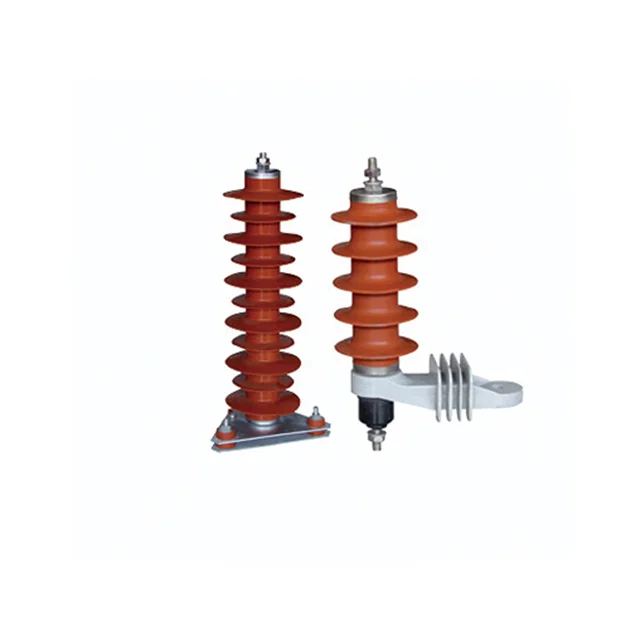
Distribution arresters handle lightning surges; stations and capacitor banks may also see switching surges and long-duration over-voltages. Confirm the nominal discharge current, the line discharge class and the energy capability against the surge study. An arrester with too little energy capability fails after repeated operations.
3. Check the residual voltage against equipment withstand
The residual voltage at the nominal discharge current must be below the withstand level of the protected equipment, with a margin for lead length. Compare the arrester residual voltage with the transformer lightning impulse withstand and the switchgear rating, and include the voltage drop in the connecting leads.
4. Plan the mounting and lead length
Keep the phase lead and the earth lead as short and straight as possible. A long loop adds inductance and raises the effective protection level, which defeats the purpose of the arrester. Mount close to the protected equipment, use a separate earth connection to the station earth grid and avoid sharp bends.
5. Confirm tests and accessories
Routine tests cover reference voltage at 1mA and leakage current at 0.75 times the reference voltage. Ask for the test record, the mounting bracket, the disconnect device and the surge counter where the installation needs them. Polymer housings should be checked for tracking and pollution performance at the site level.
6. RFQ checklist
- System voltage, earthing and temporary over-voltage
- Arrester rated voltage and nominal discharge current
- Energy capability and discharge class
- Protected equipment withstand level
- Mounting arrangement and lead length
- Accessories: bracket, counter, disconnect
- Quantity, destination and delivery date
Send the system data and the insulation coordination study and the arrester rating can be confirmed in one round.