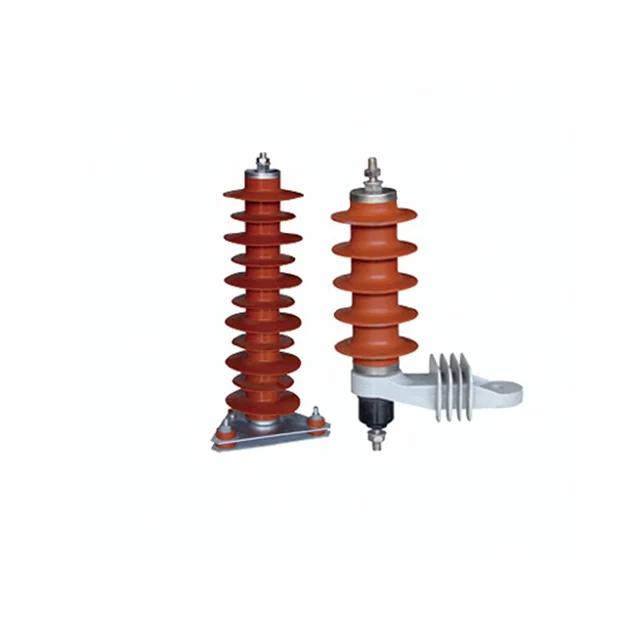
Overview
The lightning arrester protects high voltage equipment from overvoltage by diverting surge energy to earth. Correct commissioning checks and periodic testing are what keep that protection dependable over the life of the installation.
Two measurements govern the condition of the arrester. The DC reference voltage U1mA must not be less than the value specified in GB11032-2000, and the leakage current measured at 0.75 U1mA must not be greater than 50μA.
Key Features
- Appearance check — first check whether the appearance is intact.
- DC reference voltage U1mA — before the product is put into operation, measure the DC reference voltage U1mA, which shall not be less than the value specified in GB11032-2000.
- Leakage current at 0.75 U1mA — measure the leakage current at 0.75 U1mA; its value shall not be greater than 50μA.
- Periodic testing — measure once every four years after commissioning to see whether it meets the requirements.
- No power-frequency discharge voltage test for gapless arresters — gapless arresters are not allowed to undergo power-frequency discharge voltage tests.
- Standards reference — the U1mA acceptance value is referenced to GB11032-2000.
Technical Specifications
| Product name | Lightning arrester |
|---|---|
| Type | Gapless (per the test restriction in the source material) |
| Pre-commissioning check | Appearance checked for integrity |
| DC reference voltage | U1mA, not less than the value specified in GB11032-2000 |
| Leakage current | Measured at 0.75 U1mA, not greater than 50μA |
| Test interval after commissioning | Once every four years |
| Power-frequency discharge voltage test | Not allowed for gapless arresters |
| Reference standard | GB11032-2000 |
Applications
- High voltage substations — protecting equipment from overvoltage.
- Distribution networks — arrester installations requiring a defined commissioning test regime.
- Installations covered by GB11032-2000 — projects where the U1mA acceptance value is referenced to that standard.
- Sites with a periodic test programme — installations where the four-yearly measurement is part of the maintenance schedule.
Installation Conditions
- Before the product is put into operation, first check whether the appearance is intact.
- Measure the DC reference voltage U1mA before commissioning, and confirm it is not less than the value specified in GB11032-2000.
- Measure the leakage current at 0.75 U1mA and confirm it is not greater than 50μA.
- After commissioning, repeat the measurement once every four years to see whether it meets the requirements.
- Do not carry out a power-frequency discharge voltage test on gapless arresters.
How to Select
- The system voltage class of the installation the arrester protects.
- Whether a gapless arrester is required, noting the test restriction that applies to it.
- The GB11032-2000 U1mA value applicable to the arrester rating.
- The leakage current limit at 0.75 U1mA — not greater than 50μA.
- The periodic test schedule, since the measurement should be repeated once every four years after commissioning.
FAQ
What should be checked before the arrester is put into operation?
First check whether the appearance is intact, then measure the DC reference voltage U1mA.
What value should the DC reference voltage U1mA meet?
The DC reference voltage U1mA shall not be less than the value specified in GB11032-2000.
What is the limit for leakage current?
The leakage current measured at 0.75 U1mA shall not be greater than 50μA.
How often should the measurement be repeated?
Measure it once every four years after commissioning to see whether it meets the requirements.
Can a gapless arrester be given a power-frequency discharge voltage test?
No. Gapless arresters are not allowed to undergo power-frequency discharge voltage tests.
Which standard is referenced?
The acceptance value for the DC reference voltage is referenced to GB11032-2000.
Request Quote
Tell us your specifications, quantity, or application scenario and we will reply with a tailored quote.